Traverse City, MI — New regulations that dictate when and where city residents can grow and distribute medical marijuana could be changed if problems arise.
City commissioners on Monday gave final approval to a new ordinance that regulates land-use issues tied to the Michigan Medical Marijuana Act. It takes effect Aug. 26.
The ordinance allows for cultivation of up to 72 marijuana plants in single-family homes, and that concerns those who believe such activity could degrade the city’s residential neighborhoods. But commissioners weren’t ready to rule out residential growth.
“This law is not set in concrete,” Mayor Pro-Tem Ralph Soffredine said. “We can bring it back to the table, and we can tweak it and do what we want to do with it. But we need to give it a chance.”
The Michigan Medical Marijuana act, approved in 2008, allows patients to possess up to 2.5 ounces of marijuana and 12 plants. It also allows designated caregivers to grow and distribute plants to up to five patients.
But the act doesn’t specify where or when patients and caregivers can grow or exchange marijuana, so municipalities across the state were left to decide for themselves.
The new ordinance doesn’t affect the amount of plants a patient can have under state law, or the number of plants a caregiver can grow or distribute.
It instead specifies where legal marijuana-related activity can occur within city limits.
City resident Julia Wagner told commissioners she’s uncomfortable with marijuana growth in residential districts.
She voted in favor of medical marijuana, but assumed it would be closely regulated and available only at pharmacies.
“I had no idea that this could invade my neighborhood,” she said.
Her view was shared by Adrienne Rossi, a Central Neighborhood resident who called marijuana growth “extremely unhealthy for our residential neighborhoods.”
Pro-medical marijuana activists countered that residential growth allows patients easier and safer access to the drug.
Current residential growth hasn’t led to significant problems, they said, and the city could expose itself to potential litigation if it tries to prevent residents from exercising a right afforded under state law.
The ordinance allows for cultivation in excess of 72 plants in industrial districts, provided the cultivation facility owner obtains a license from the city.
It also allows for medical marijuana “collectives” in most commercial districts of the city.
Any medical marijuana that fits within the confines of the Medical Marijuana Act can change hands in such collectives, but growing isn’t allowed there.
Source: Traverse City Record-Eagle (MI)
Author: Art Bukowski
Published: August 17, 2010
Copyright: 2010 The Traverse City Record-Eagle
Contact: letters@record-eagle.com
Website: http://www.record-eagle.com/
Monday, August 30, 2010

City on Target With Marijuana Ordinance
Lansing is doing the right thing by bringing medical marijuana care-givers under its ordinance for home businesses. Doing so will allow the city to set requirements that protect neighborhoods, preserve public safety and also provide a clear framework for those choosing this relatively new type of business.
Since Michigan passed its medical marijuana ballot proposal in 2008, patients have been able to seek a doctor’s approval and then register with the state. Doing so makes them eligible to either grow plants for themselves or find a state registered care-giver, who will grow the plants and prepare the marijuana for use.
But what the ballot proposal didn’t do was create a structure for dealing with a wide array of businesses that support the new medical marijuana industry, such as medical marijuana dispensaries or home-based medical marijuana caregivers.
Lansing is working on ordinances that address both the dispensaries, which would locate on commercially zoned property, and the home-based care-givers, who would be permitted to operate in residential neighborhoods, but only if they meet certain criteria.
While there has been concern in some parts that local government or local law enforcement would make it difficult for medical marijuana entrepreneurs, Lansing’s approach to date has been right on the mark.
As City Attorney Brig Smith recently commented about the home occupation ordinance:
“The goal is to regulate this occupation just like we would regulate others, whether the home occupation is growing tomato plants or medical marijuana.”
That’s more than reasonable. And a review of the ordinance finds it fairly straight forward as well.
The ordinance prohibits such businesses from operating within 1,000 feet of public or private schools, colleges, youth centers, arcades and public swimming pools. That’s reasonable, given that marijuana is still a controlled substance. The ordinance also parallels state rules in requiring that marijuana be kept in an enclosed, locked space.
The majority of Michiganians voted in favor of medical marijuana, wanting this treatment option for those who may benefit. Lansing is on the right path to create a clear set of laws for entrepreneurs involved in serving these patients while at the same time protecting its residents.
Source: Lansing State Journal (MI)
Published: August 17, 2010
Copyright: 2010 Lansing State Journal
Website: http://www.lansingstatejournal.com/
Friday, August 6, 2010
SOUTHFIELD COMPASSION MEETING MONDAY, AUGUST 9 FROM 6:30-8:30 P.M.
Join us Monday, August 9, 2010 as we discuss issues that affect Michigan's Medical Marijuana Community. Network with Attorney's, Grow Specialists, Patients and Caregivers in a safe and comfortable environment.
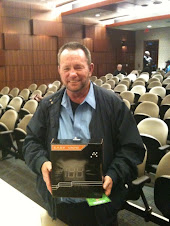
DIGITAL VAPORIZER RAFFLE!
DIGITAL VAPORIZER RAFFLE!
Monday, June 21, 2010
Southfield Compassion Meeting MONDAY JULY 12, 2010 from 6:30-8:30 p.m.
Join us Monday, July 12, 2010 from 6:30-8:30 p.m. at the Southfield Library, 26300 Evergreen Road, Southfield.
Southfield Compassion and BDT's Pipe & Tobacco will be RAFFLING a Digital Vaporizer during the Meeting.
Southfield Compassion and BDT's Pipe & Tobacco will be RAFFLING a Digital Vaporizer during the Meeting.
Monday, April 5, 2010

Medical Marijuana Meeting TONIGHT 6:30-8:30 p.m.
Southfield Compassion's Next Medical Marijuana Meeting will take place TONIGHT from 6:30-8:30 p.m. at the Southfield Library, 26300 Evergreen Road.
We will be RAFFLING a DIGITAL VAPORIZER and Medical Marijuana Gift Basket during TONIGHT's MEETING!!!!
Topics of discussion include:
Qualifying Conditions;
Cultivation;
Cooking;
Taxes;
Insurance;
Upcoming Private Medicated Friendly Events; and much more.
Refreshments and snacks will be served. Meetings are open to the public 18+ or accompanied by a parent/guardian.
Learn how to become a Patient/Caregiver. Access to Attorneys, Physicians and Grow Specialists.
Wednesday, March 31, 2010
Hash Bash April 3, 2010


Hash Bash is an annual event held in Ann Arbor, Michigan on the first Saturday of April. The event is a collection of speeches, live music, street vending centered around the goal of reforming federal, state and local marijuana laws.
The first Hash Bash was held in 1971 Ann Arbor. The campus of the University of Michigan sits upon state property, and so anyone caught with marijuana on any campus location is subject to the more strict state marijuana laws.
Subscribe to:
Posts (Atom)