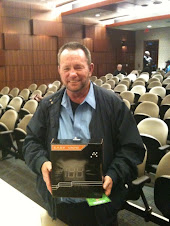
Join us Wednesday, July 13, 2011 from 6:30-8:00 p.m. at the Farmington Library, 32737 W. Twelve Mile Rd., Farmington Hills, as we discuss Medical Marijuana. Topics will include Cultivation, Edibles, How to Become a Patient/Caregiver, and much more.
Meetings are open to the public 18+
Wednesday, July 6, 2011

Wednesday, January 26, 2011
Royal Oak's Split Marijuana Vote Satisfies Neither Side
A vote by the Royal Oak City Commission left advocates of medical marijuana pledging to sue the city but gave opponents of the drug less than the complete ban they had hoped to see passed.
The vote, which calls for strict limits on the use and distribution of the drug, came early Tuesday following 90 minutes of public comments.
"We made it very clear that someone using medical marijuana in Royal Oak would not be subject to criminal prosecution," Commissioner Chuck Semchena, a longtime foe of medical marijuana, said Tuesday. "This new ordinance merely prohibits the growing or distribution of marijuana."
The vote was a deep disappointment to fellow Commissioner Jim Rasor, who joined Mayor Jim Ellison in opposing the strict limits.
"I have no doubt that we will find ourselves in court, spending taxpayer money to defend our indefensible and illegal action, instead of spending that money on police officers and other necessary city expenses," Rasor said.
Said Royal Oak City Manager Don Johnson: "I think we would've been sued no matter what we did."
The ordinance change stopped short of a proposal that medical marijuana users feared might ban the drug entirely. The seven-member commission tentatively passed that proposal last fall at what is called the first reading of a new ordinance. It was based on the Livonia model and, in effect, would have banned any use of medical marijuana, City Attorney David Gillam told commissioners last year.
The American Civil Liberties Union of Michigan has sued Livonia, along with Birmingham and Bloomfield Hills, for passing such ordinances, on behalf of a Birmingham couple who said they have state-approval cards for treating their health conditions with medical marijuana but fear using or growing the drug in the three cities.
South Lyon, which has a similar de facto ban, was sued this month by a resident who has a state-approval card for using the drug, Grosse Pointe attorney Paul Tylenda, who said he is representing the man at no charge, said Monday.
Royal Oak, although it passed a more lenient rule than Livonia, can still expect to be sued, Tylenda said Monday night after joining the stream of public speakers at the commission meeting.
The 4-3 vote for the new limits modified the Livonia model to allow consumption of medical marijuana in Royal Oak, if the drug is "obtained in compliance with the state act," City Manager Johnson said. "But it is not allowing cultivation or distribution of medical marijuana in the city."
To comply with the Royal Oak ordinance change, residents must go outside the city to raise medical marijuana or obtain it from a state-approved caregiver, then they can return home to consume it, Johnson said.
The commissioners' vote did not follow a controversial recommendation by the Royal Oak Planning Commission to allow state-approved patients to grow the drug in their own homes and state-approved caregivers to grow it in their patients' homes, but which also prohibited any distribution or growing facilities.
Brett Tillander, executive director of the South Oakland Boys and Girls Club, said last week that he and 40 other local leaders strongly opposed to the Planning Commission's recommendation submitted a letter of protest to the city.
Royal Oak Passes Strict Limits on Medical Marijuana
Royal Oak officials voted for strict limits on the use and distribution of medical marijuana.
The vote left advocates of medical marijuana vowing to sue the city as they left Royal Oak City Hall but it gave opponents of the drug less than a complete ban they’d hoped to see passed.
“We made it very clear that someone using medical marijuana in Royal Oak would not be subject to criminal prosecution,” City Commissioner Chuck Semchena said.
“This new ordinance merely prohibits the growing or distribution of marijuana,” Semchena, a longtime foe of medical marijuana, said today. Still, the vote was a deep disappointment to City Commissioner Jim Rasor, who joined Mayor Jim Ellison in opposing the strict limits.
“I have no doubt that we will find ourselves in court, spending taxpayer money to defend our indefensible and illegal action, instead of spending that money on police officers and other necessary city expenses,” Rasor said today.
“I think we would’ve been sued no matter what we did,” Royal Oak City Manager Don Johnson said today.
The ordinance change stopped short of mirroring a proposal that medical marijuana users feared might pass and ban the drug entirely. That proposal was one that Semchena favored last year, and which the seven-person Royal Oak City Commission tentatively passed last fall at what is called the first reading of a new ordinance. It was based on the so-called Livonia model and, in effect, would have banned any use of medical marijuana, City Attorney Dave Gillham told commissioners last year.
The American Civil Liberties Union of Michigan has sued Livonia, along with Birmingham and Bloomfield Hills, for passing such ordinances, on behalf of a Birmingham couple who said they have state-approval cards for treating their health conditions with medical marijuana but fear using or growing the drug in the three communities. South Lyon also has a similar de facto ban and the township was sued this month by a resident who has a state-approval card for using the drug, Grosse Pointe attorney Paul Tylenda, who said he is representing the man at no charge, said Monday.
Royal Oak, although it passed a more lenient rule than the Livonia model, can still expect to be sued, Tylenda said Monday night, after joining a 90-minute stream of public speakers to the City Commission.
The 4-3 vote for the new limits, contained in amendments to the city’s zoning ordinance, modified the Livonia model to allow consumption of medical marijuana in Royal Oak, so long as the drug is “obtained in compliance with the state act,” City Manager Johnson said.
“But it is not allowing cultivation or distribution of medical marijuana in the city,” he said. To comply with the Royal Oak ordinance change requires residents to travel outside the city to raise medical marijuana or obtain it from a state-approved caregiver, then return to their homes to consume it, Johnson said.
Asked whether that could make it more costly, more arduous and more risky for residents to obtain the drug, Johnson said: “No matter what you do, it’s still illegal under federal law.”
The city’s 120-day moratorium on establishing medical-marijuana facilities, set to expire Feb. 13, remains in place until the ordinance change takes effect in Feb. 3, but the moratorium now is moot because the new rule forbids any establishments, such as dispensaries or compassion clubs, city officials said.
The commissioners’ vote did not follow a controversial recommendation by the Royal Oak Planning Commission to allow state-approved patients to grow the drug in their own homes, and to allow state-approved caregivers to grow it in their patients’ homes, but which also prohibited any distribution or growing facilities in the city.
South Oakland Boys and Girls Club Executive Director Brett Tillander said last week that he and 40 other community leaders strongly opposed to the Planning Commission’s recommendation submitted a letter of protest to the city.
Thursday, January 20, 2011
Southfield's Proposed Medical Marijuana District Is A No-Go
Southfield's City Council voted unanimously Tuesday night against proposed zoning regulations that would have allowed medical marijuana growing facilities in the city's light-industrial districts.
The vote came after more than a dozen residents and two lawyers debated the validity of the zoning. Council members then voted to extend the city's 180-day moratorium -- set to end Friday -- for another 180 days.
"Maybe it's not our job to regulate at all," said Councilman Kenson Siver, maintaining that he still supports the Michigan Medical Marihuana Act passed in 2008, but adding that the council needs more information before passing ordinances. "Maybe it's something the state should figure out and not put us in this dilemma."
The proposal would have allowed caregivers licensed through the state to grow up to 12 plants for themselves and 12 each for five licensed patients in light-industrial districts along 8 Mile and Telegraph roads.
Councilman Sidney Lantz, the council's most vocal opponent, said those in need can buy pills for THC, marijuana's active ingredient, through pharmacies.
It "will increase crime, will cost you money, and these people who are pushing it now don't know what they're doing," Lantz said. "This could be the worst thing that could happen to you."
Southfield lawyer Neil Rockind called the proposed zoning's intentions great, but said the proposal violates state law by dictating where caregivers can grow and forcing them to disperse confidential personal information. "This ordinance will be the subject of a lawsuit" if the measure would have passed, Rockind said.
John Smith, a resident since 1975 with a wife who is a hospice nurse, said he opposed the law only because he thought it would affect those growing at home. Southfield Planning Director Terry Croad said the proposal addresses only caregiver growing and that residents can still grow plants for personal use.
Southfield to Vote on Marijuana Zone
City would limit growers to industrial areas.
Southfield's City Council is to vote Tuesday JANUARY 25, 2011 on strict zoning proposals that limit medical marijuana growing areas to light industrial districts, as communities statewide struggle to comply with the state's medical marijuana law.
"Some communities have taken a prohibition approach," said Southfield Planning Director Terry Croad. "Anybody who's got a moratorium has a wait-and-see approach. We're recommending a regulatory approach."
Council members are to vote at 7 p.m. at City Hall.
Cities have created zoning proposals, laws, moratoriums and outright bans since Michigan voters passed the Medical Marijuana Act in 2008. The law allows those with medical conditions to use marijuana and caregivers to grow up to 12 plants each for themselves and five patients.
Lawsuits are pending in Wayne County Circuit Court that were filed by the American Civil Liberties Union of Michigan to challenge bans on medical marijuana in Birmingham, Bloomfield Hills and Livonia. Bloomfield Township was sued in December after passing an ordinance that prohibits growing marijuana and requires users to register with police.
On Jan. 10, the Farmington Hills City Council tabled its regulations that allow personal medical marijuana use in residents' own homes. The regulations use land use guidelines to curb commercial medical marijuana transactions in the city, essentially forbidding compassion clubs and dispensaries.
Council members said they wanted to study a Grand Rapids ordinance that allows medical marijuana growing as a home occupation in which the caregiver delivers the marijuana.
"There are some communities that said, 'Hey, our people voted for this; we've got to do it,' " said Phil McKenna, president of McKenna Associates, a municipal planning firm working with more than two dozen Michigan communities on medical marijuana laws. "And there are others that are saying, 'What we voted for isn't what we're getting.' I think there's a lot of confusion out there."
Southfield's guidelines propose locating caregiver growing operations in five light industrial districts. The businesses must be at least 200 feet from residential areas.
The city has 20 potential sites, Croad said.
ACLU of Michigan staff attorney Dan Korobkin said Friday that Southfield's law is too restrictive.
"I think having so few areas you can do that, and making it so you have to open up a business, means you're placing unreasonable regulations on caregivers," Korobkin said.
Longtime Southfield City Councilman Sidney Lantz opposes the regulations and said he thinks the proposal allows the city to grant waivers for operations outside the zones -- a point of disagreement with Mayor Brenda Lawrence.
"I think it puts us in the position where we'll have control of it," Lawrence said. "It'll give the people the right they voted to have, and it will provide services for those who qualify for medical marijuana."
Friday, January 7, 2011
JOIN US MONDAY, JANUARY 10, 2011
Southfield Compassion meets MONDAY January 10, 2011 from 6:30-8:30 p.m. at the Southfield Library (Meeting Room) 26300 Evergreen Rd., Southfield, Michigan.
We will discuss Medical Marijuana and how it relates to Patients and Caregivers in Michigan.
Network with Patients, Caregivers, Grow Specialists and Attorneys.
Receive FREE one-on-one legal advice from a local attorney specializing in Medical Marijuana.
DIGITAL VAPORIZER RAFFLE!
Meeting's are open to the public, 18+.
Medical Pot Cases Head To Court
Detroit -- Several showdowns over Michigan's medical marijuana law are slated for courtrooms across the state this year as users and law enforcement officials clash over the drug's legality.
Oakland County prosecutors have until Friday to file legal arguments stating why nine people arrested in a medical marijuana raid should be tried on felony drug charges in a Ferndale court.
In a Wayne County courtroom Jan. 21, attorneys for Birmingham and Bloomfield Hills will ask to have a lawsuit against their cities moved to Oakland County, where prosecutors and law enforcement have declared medical marijuana dispensaries illegal.
And a Madison Heights couple, certified under Michigan law to use, possess and grow medical marijuana, are asking the Michigan Supreme Court to dismiss felony drug charges against them. A decision is expected this year.
In another case, federal agents want the state of Michigan to turn over records in a medical marijuana investigation of seven people in the Lansing area.
The U.S. Attorney's Office is asking a judge to order the state to comply with a subpoena. In a court filing last week, prosecutors said the state is resisting because of a privacy provision in Michigan law.
These controversies stem from the Michigan Medical Marijuana Act, passed in 2008 by Michigan voters. The act approved use of the drug for people with qualifying debilitating medical conditions. It allows patients certified by a doctor to use marijuana and caregivers to grow and provide it for up to five patients.
In the Ferndale case, prosecutors are challenging the law, saying the sale and distribution of any marijuana is illegal.
But lawyers for the nine defendants who worked or were co-owners of Clinical Relief, a marijuana dispensary, are fighting the charges and asking a district court judge to dismiss the case.
An undercover narcotics officer admitted he used a phony Michigan medical marijuana identity card to make purchases at the clinic, which was raided by an Oakland County Sheriff's SWAT team in late August.
The officer said he got approval from his superiors at the Sheriff's Office and from the Prosecutor's Office before making the card. The state issues the ID cards to people certified by a physician to use marijuana to treat a medical condition.
Lawyers for the defendants said that because the state considers the cards private medical information, there is no way for a marijuana dispensary to confirm if a card is real or fake.
Judge Joseph Longo has set a Feb. 7 deadline for defense lawyers to file their arguments, court officials said. A decision in the case is expected after March.
Cities Take Action
Across the state, as communities struggle to interpret the law, many have enacted measures that essentially prohibit medical marijuana use, saying the drug remains illegal under federal law.
Earlier this month, the American Civil Liberties Union of Michigan sued three Metro Detroit communities over their bans, claiming they don't have the power to veto state law.
The lawsuit alleges that Livonia, Bloomfield Hills and Birmingham have violated state law with ordinances that effectively banned a Birmingham couple and other patients from legally using medical marijuana.
In an unrelated case, an Oakland County couple certified to use medical marijuana under state law are asking the Michigan Supreme Court to dismiss felony drug charges against them.
Robert Redden and Torey Clark were charged with drug possession after police found 21 marijuana plants in a raid at their Madison Heights home in 2009.
Prosecutors allege the couple possessed more than the allowable number of plants and did not keep the plants in an enclosed, locked facility as required.
Their case received attention in September after a state appellate judge wrote a 30-page opinion urging state lawmakers to take action on the "inartfully drafted" medical marijuana law, which he said clashes with other Michigan laws.
Law's Consequences
Confusion over Michigan's medical marijuana law has led to patients with valid prescriptions losing their jobs or being threatened with eviction from their homes. Many federally subsidized housing complexes think they must follow federal laws or risk losing federal funding.
James McCurtis, spokesman for the Michigan Department of Community Health, which issues the state ID cards, said 83,552 applications had been sent to the state as of Dec. 10. Of those, 45,808 patient registrations were issued. The number of caregivers is not available and is not included in this number, officials said. More than 9,560 applications have been denied.
Matthew Abel, a Detroit-area attorney who specializes in medical marijuana defense cases, does not predict drastic changes to Michigan's medical marijuana law from any court rulings.
It's not certain what lawmakers will do, he said, under the new, Republican-controlled Legislature and Gov.-elect Rick Snyder.
"I think the law is going to stay intact. It's possible but unlikely that the Legislature will come to some agreement to modify the law. They need a three-fourths majority to repeal the law," Abel said. "We are looking to see what changes the new administration is going to bring to this."
Source: Detroit News (MI)
Author: Jennifer Chambers, The Detroit News
Published: January 3, 2011
Copyright: 2011 The Detroit News
Contact: letters@detnews.com
Website: http://www.detnews.com/
URL: http://drugsense.org/url/OxAwCezw
How To Fix Medical Marijuana in Michigan
Grand Rapids, MI -- Two things are clear about medical marijuana in Michigan. First, voters more than two years ago overwhelmingly approved the use of the otherwise illegal drug to help cancer patients and others who can benefit from its pain-relieving, appetite-inducing effects.
Second, administration of that citizen-approved law is a mess. Local communities are in a quandary about how exactly to regulate the drug. Some have banned it altogether, as Wyoming did in November, in absence of clear regulations from the state. Others, such as Grand Rapids, have adopted zoning ordinances to ensure the caregivers who grow marijuana are licensed as home-based businesses and do not pose a danger to their neighbors.
This legal patchwork serves no one well. The Legislature should do what it frequently must when voters approve new statutes - pass enabling laws that respect the will of voters and set in place reasonable safeguards against illegal activity. Newly inaugurated lawmakers, along with Gov. Rick Snyder, have the opportunity to clear away the confusing haze surrounding the law and provide the needed guidance. The absence of legislative action has left a morass that will ultimately be sorted out by courts - not a smart or democratic way to cement public policy.
The law, passed by 63 percent of voters in November 2008, allows people to register with the Michigan Department of Community Health to become sanctioned medical marijuana patients. A registered patient must have a medical condition defined under the law - including AIDS, glaucoma, cancer, chronic pain and others - and be certified by a physician. Patients are allowed to possess up to 2.5 ounces of the drug at one time and grow 12 plants in "an enclosed, locked facility." Qualified "caregivers" can grow plants for up to five patients.
Snipped
Complete Article: http://mapinc.org/url/Ep8ejnZy
Source: Grand Rapids Press (MI)
Published: January 4, 2011
Copyright: 2011 Grand Rapids Press
Contact: pulse@grpress.com
Website: http://www.mlive.com/grpress/
National Guard in Federal Raid Raises Questions
Lansing, MI -- On Nov. 30, the Drug Enforcement Agency raided a facility in Meridian Township. Along with ground forces, the Michigan National Guard provided two Blackhawk helicopters to assist in the operation.
The facility was a joint growing operation by several registered patient caregivers. The caregivers decided to rent the facility to grow medical marijuana for their patients, and remove the drug from their homes.
Dave Clark, an Okemos attorney representing one of the patient caregivers, told the City Pulse that his client and the others had done nothing illegal.
“We were surprised there was even a warrant. Everything inside was legal under state law,” Clark said. “I’m sure it was 100 percent legal.”
Clark and his client were not the only ones surprised by the raid. Meridian Township Police Chief Dave Hall tells Michigan Messenger that his department was never informed of the raid by federal authorities. Traditionally, when a law enforcement agency is going to be engaged in an action in another jurisdiction, they let the law enforcement from that jurisdiction know. This is done to prevent sending officers to the scene of a police action because of 9-1-1 calls.
United States District Attorney Rene Shekmer of the Western District in Grand Rapids told the City Pulse that the raid was conducted at several locations, and agents seized 400 plants, as well as growing equipment.
“Under federal law, there is no exemption for medical marijuana. Under Michigan law, there are limits and rules you have to follow,” Shekmer told the City Pulse. “As a broad brush, it does not appear they were (state-compliant) because of the number of plants.”
Feds are also seeking information from the Michigan Department of Community Health about several medical marijuana caregivers. It is widely believed this subpoena, issued in June, is directed at the caregivers involved in the Meridian Township growing operation.
But that conflict over whether or not the facilities were following Michigan law, also raises the questions about why the Michigan National Guard participated in the operation.
“Our helicopters do not support action in violation of state laws. A warrant authorizing Guard air support was issued for the Meridian Township mission. We supported the mission,” says Angela Simpson, deputy public information officer for the Michigan National Guard.
Simpson says in 2009 Guard assets were used to assist law enforcement in the seizure of 730,000 tablets of ecstasy, 607,865 pounds of illegal drugs (cocaine, heroin, hashish, crystal meth, opium, and others) and 107,480 pounds of marijuana. The counter-drug program’s focus is on prevention, education and apprehension support.
The Blackhawk helicopters, Simpson said, were not armed, nor were National Guard personnel.
Simpson also released an 80 page document from the Secretary of Defense which is the basis for the Guard’s involvement in federal government operations. Under those standing orders, Simpson says, the Guard can assist when presented with a warrant. Civilian leadership is not required to be briefed on those actions, or to approve them.
Those orders also authorize the deployment of Guard units and assets in drug interdiction actions and outline specific rules of engagement including lethal force to protect lives.
Former Gov. Jennifer Granholm’s office said last month that Granholm supported the actions of the National Guard, but declined to answer any specific questions.
Gov. Rick Snyder’s office did not respond to multiple requests for comment on this situation.
The ACLU of Michigan says it is too early to tell if the use of National Guard assets was legal, or if the DEA was right to conduct the raid.
“This situation seems to raise more questions than answers. The federal government has a policy of not enforcing federal marijuana laws where state medical marijuana laws are being followed,” said Dan Korobkin, ACLU of Michigan staff attorney. “However, if a grow operation is being conducted outside of the confines of the MMMA, federal law enforcement may have reason to investigate and act.”
Source: American Independent (NC)
Author: Todd A. Heywood
Published: January 6, 2011
Copyright: 2011 The American Independent News Network
Contact: editor@americanindependent.com
URL: http://drugsense.org/url/sE78mXn9
Website: http://www.americanindependent.com/
Thursday, December 30, 2010
Food Drive for Free Pot Nets 12,000 Pounds of Food from Medical Marijuana Dispensary

SANTA CRUZ (CBS/KCBS) The Second Harvest Food Bank in Santa Cruz County had a successful holiday food drive, thanks in part to an amazing number of donations from a small business.
No, not a car dealership or a restaurant.
The Granny Purps Marijuana Dispensary.
The food collection barrels were pretty empty at the dispensary in Soquel, until they got the bright idea to offer joints for food, reports CBS affiliate KCBS.
"We originally didn't have a limit and people could bring in as many cans as they wanted," said dispensary co-owner Phil Hicks. "And for every four cans, we would give them a free, pre-rolled joint. They had to be a legal medical marijuana patient and a part of our collective to participate in the promotion."
Each patient was also limited to a maximum of three cigarettes a day.
Hicks said the next thing they knew, they were inundated with cans of food.
"The response blew away anything we expected. We started in November. I was hoping we could fill five barrels before Thanksgiving, but we had seven filled by Thanksgiving," he said. "I said at this rate, I think we can get 10,000 pounds by Christmas."
Hicks said they ended up collecting close to 12,000 pounds of food.
Friday, December 24, 2010
Michigan's Medical Marijuana Law Shrouded in Haze
Lansing -- Michigan's two-year-old law allowing the use of marijuana for medical purposes is leaving communities, courts, patients and police locked in disputes over what is legal and what isn't.
Many patients who have the state's OK to use marijuana to ease their pain from conditions ranging from cancer to Crohn's disease have been arrested and others have been fired because of different interpretations of the law approved by Michigan voters in late 2008. Courts face a rash of medical marijuana cases, with the law raising so many questions one state appeals court judge described reading it as a "maze."
Local governments are jumping in and passing their own ordinances, mostly trying to limit, ban or regulate a wave of businesses popping up to grow and sell the drug.
Michigan isn't alone in trying to sort out hazy medical marijuana laws. Fourteen other states have similar statutes — prompting raids and debate over local regulations in California, disputes over which doctors can recommend pot in Colorado and fights over proposed regulations in New Jersey.
Many of the clashes are between medical marijuana advocates who say they're acting within the law and police who say they aren't. Adding to the tension is federal law that continues to ban the use and possession of marijuana. Although it won't be a top priority for lawmakers in a state swamped by economic and state government budget problems, Michigan's next Legislature likely will devote some time to clarifying the law.
A class on legal issues is a staple at Med Grow Cannabis College in Southfield, one of the few medical marijuana trade schools in the nation. Nick Tennant, who last year opened up the trade school in suburban Detroit, said the goal of the class is to provide students some clarity about a law that has gray areas.
"A lot of people want definitive answers," Tennant, 25, said. "It's just hard, because sometimes the attorneys can't really give a definitive answer. They can give almost a 'best practices, here's how you stay out of trouble, don't raise your risk tolerance in this gray area' type of thing."
The school also provides students with instruction on the medical and horticultural aspects of growing pot for medicinal use.
"We don't want the people and the public to be afraid of us or to think we're drug dealers, because that's really a popular misconception as well. We're here to help," said Travis Williams, a 38-year-old Detroiter who took classes at the school and now provides marijuana he grows himself to patients.
Michigan's more than 45,000 licensed medical marijuana patients can possess up to 2 1/2 ounces of usable marijuana and have up to 12 plants kept in an enclosed, locked facility — or have a registered caregiver grow the drug for them.
Some police agencies want a better system to verify the authenticity of authorization cards. Physicians must certify patients would benefit from the pain-reducing aspects of marijuana, but it's left to the patients to register with the state and to self-regulate the amount and quality of the drug they take.
"There is absolutely no connection to medicine and what's going on with medical marijuana right now," said Oakland County Sheriff Mike Bouchard. "You don't have a required patient-doctor relationship. You don't go to a state-licensed, inspected and regulated facility like a pharmacy. ... It's creating already a lot of problems and a lot of misconceptions."
Advocates of medical marijuana say nothing in the law prohibits dispensaries and collective growing facilities, and that communities are ignoring the will of Michigan voters by cracking down on those businesses. Advocates of the law say it's broad by design to protect a wide range of activities.
Many Michigan communities have said state law isn't clear or is largely silent on how the drug can be grown and distributed by anyone other than patients or caregivers, or how plants and seeds can be bought in the first place.
Oakland County narcotics agents raided two medical marijuana dispensaries this summer after they sold the drug to deputies carrying phony state ID cards. The city of Lansing recently adopted an ordinance banning the opening of any new medical marijuana businesses until July, in hopes of buying enough time for local officials to draft rules for their operation.
The American Civil Liberties Union has sued the southeast Michigan cities of Livonia, Birmingham and Bloomfield Hills and joined a lawsuit against the west Michigan city of Wyoming over policies it says effectively ban the use of medical marijuana.
Local governments counter that they are trying to make sure illegal drug dealing and other crimes don't take place in the absence of a clear state law.
Individual patients also have run into trouble with police or employers. Joseph Casias, authorized by the state to use marijuana because of pain associated with cancer, lost his job at a Wal-Mart store in Battle Creek in 2009 after testing positive for pot. He's battling the company in court.
Michigan Court of Appeals Judge Peter O'Connell wrote in a September opinion that the law is susceptible to multiple interpretations and that reading it "carelessly or out of context could result in jail or prison time for many of our citizens." He urged state officials to clear up contradictions and vague areas in the voter-approved law.
Ari Adler, a spokesman for incoming Republican House Speaker Jase Bolger, said "the level of confusion" that exists related to the law likely will prompt the new Legislature to address it during the 2011-12 session.
Householder reported from Southfield, Mich.
Source: Associated Press (Wire)
Author: Tim Martin and Mike Householder, Associated Press
Published: December 22, 2010
Copyright: 2010 The Associated Press

Cannabis Cookbooks
Cooking with Ganja

Written and published by Eric,"Cooking with Ganja" is an original English cookbook that teaches all you need to know about cooking grass and hash. Clearly written, with no beating around the bush, this is Ganja cookery at it's best.

Written and published by Eric,"Cooking with Ganja" is an original English cookbook that teaches all you need to know about cooking grass and hash. Clearly written, with no beating around the bush, this is Ganja cookery at it's best.
JOIN US MONDAY, JANUARY 10, 2011
Southfield Compassion will meet MONDAY, January 10, 2011 from 6:30-8:30 p.m. at the Southfield Library, to discuss Medical Marijuana in Michigan.
Join us in a safe, comfortable environment as we discuss growing, cooking and the use of Medical Marijuana.
One-on-one legal advice from an Attorney based in Southfield, that specializes in Medical Marijuana.
DIGITAL VAPORIZER RAFFLE!!!!!!!
Network with Attorneys, Grow Specialists, Patients and Caregivers.
Monday, August 30, 2010
Sheriff Explains Action Against Medical Marijuana Sellers, Growers
One day after an investigation that resulted in 15 arrests, the closure of two medical marijuana dispensaries and the seizure of approximately $750,000 worth of marijuana products, Oakland County Sheriff Michael Bouchard spoke about what he sees as a growing problem.
“This is Michigan. This is not a Cheech and Chong movie,” Bouchard said during a Thursday afternoon press conference.
Ferndale’s Clinical Relief medical marijuana dispensary, 362 Hilton, was among the establishments that were raided Wednesday by undercover officers with Oakland County’s Narcotics Enforcement Team.
Police action may not have come as a surprise to employees there. Bouchard said the Sheriff’s Office recently warned those at the facility that police believed they were participating in illegal activity.
Undercover officers allegedly bought marijuana at the facility without a medical marijuana card, which is required for a legal purchase of the drug. Marijuana also was being sold in the parking lot, and undercover officers witnessed hand-to-hand drug deals, Bouchard said.
Other drugs were also confiscated, and the owner had solicited others to buy high-end marijuana to sell in the establishment, he said.
“There were many commonalties with what we regularly see in drug houses,” Bouchard said. “One place had live alligators walking around protecting the product.”
The evidence was on display for the media, ranging from jars of a wide variety of marijuana strains and marijuana plants to candy, cookies, sugar and lollipops, along with several guns.
Everybody’s Cafe, in Waterford Township, was raided under similar circumstances Wednesday, after officers said they purchased marijuana without proper credentials there. Police also raided multiple residences, though the locations of those homes were not released.
Many arrest details are not yet available because no suspects have been arraigned. Arraignment could be as soon as today, Bouchard said.
“( Marijuana is ) illegal to use except in certain, limited circumstances,” Oakland County Prosecutor Jessica Cooper said during the press conference. “In Michigan, it is very limited.”
Limits include a cap on plants per patient ( 12 ) and patients per caregiver ( five ). Patients are not able to purchase the drug legally from anyone other than their designated caregiver, and marijuana plants must be maintained in an enclosed, locked facility.
“No dispensaries are authorized,” Cooper said. “No co-ops are authorized.”
She said the state’s medical marijuana act is quite different from that of other states, like California.
“Most of the population does not understand that,” Cooper said. “Medical marijuana is an exception ( that has been ) carved out for people who have a debilitating disease.”
Both Bouchard and Cooper agreed that the statute needs clarification. They suggested changes that might make the law clearer.
“New Jersey has one state-run dispensary,” Cooper said. “That would eliminate the need for caregivers and eliminate the need for growers.”
Bouchard said a tamper-proof medical marijuana card with a photo ID should be required. A photo is not required on the current cards.
“There’s no way an officer or a deputy can verify that it’s a valid card,” Bouchard said.
Law enforcement officials don’t want to deal with the issue, Bouchard said, noting that enforcement can be costly and require many resources.
“We don’t want to deal with this at all if it’s within the scope of the law,” Bouchard said. “It’s going to divert a lot of precious resources from things we could and should be doing. This is not something we should be spending a lot of time and money on.”
Bouchard said in his opinion, voters decided that people who were suffering deserved to have their pain lessened when the measure passed in November 2008.
“This has gone far ( away ) from that,” he said. Patients have received medical marijuana cards for things such as stomachaches and shoulder pain, Bouchard said, while others have taken the opportunity to “take an illegal operation and give it the air of legality.”
An investigation is ongoing and more arrests could be made. Suspects could face charges such as possession of marijuana with intent to deliver and manufacturing marijuana, with penalties ranging from 90 days to 15 years imprisonment.
“This is a clear abuse of Michigan’s medical marijuana exemption,” Bouchard said. “It will get nothing but worse. There will be more problems unless the Legislature does its job.”
Source: Daily Tribune, The (Royal Oak, MI)
Copyright: 2010 The Daily Tribune
Contact: editor@dailytribune.com
Website: http://www.dailytribune.com/
Author: Dave Phillips, For the Daily Tribune
Traverse City Approves Marijuana Regulations
Traverse City, MI — New regulations that dictate when and where city residents can grow and distribute medical marijuana could be changed if problems arise.
City commissioners on Monday gave final approval to a new ordinance that regulates land-use issues tied to the Michigan Medical Marijuana Act. It takes effect Aug. 26.
The ordinance allows for cultivation of up to 72 marijuana plants in single-family homes, and that concerns those who believe such activity could degrade the city’s residential neighborhoods. But commissioners weren’t ready to rule out residential growth.
“This law is not set in concrete,” Mayor Pro-Tem Ralph Soffredine said. “We can bring it back to the table, and we can tweak it and do what we want to do with it. But we need to give it a chance.”
The Michigan Medical Marijuana act, approved in 2008, allows patients to possess up to 2.5 ounces of marijuana and 12 plants. It also allows designated caregivers to grow and distribute plants to up to five patients.
But the act doesn’t specify where or when patients and caregivers can grow or exchange marijuana, so municipalities across the state were left to decide for themselves.
The new ordinance doesn’t affect the amount of plants a patient can have under state law, or the number of plants a caregiver can grow or distribute.
It instead specifies where legal marijuana-related activity can occur within city limits.
City resident Julia Wagner told commissioners she’s uncomfortable with marijuana growth in residential districts.
She voted in favor of medical marijuana, but assumed it would be closely regulated and available only at pharmacies.
“I had no idea that this could invade my neighborhood,” she said.
Her view was shared by Adrienne Rossi, a Central Neighborhood resident who called marijuana growth “extremely unhealthy for our residential neighborhoods.”
Pro-medical marijuana activists countered that residential growth allows patients easier and safer access to the drug.
Current residential growth hasn’t led to significant problems, they said, and the city could expose itself to potential litigation if it tries to prevent residents from exercising a right afforded under state law.
The ordinance allows for cultivation in excess of 72 plants in industrial districts, provided the cultivation facility owner obtains a license from the city.
It also allows for medical marijuana “collectives” in most commercial districts of the city.
Any medical marijuana that fits within the confines of the Medical Marijuana Act can change hands in such collectives, but growing isn’t allowed there.
Source: Traverse City Record-Eagle (MI)
Author: Art Bukowski
Published: August 17, 2010
Copyright: 2010 The Traverse City Record-Eagle
Contact: letters@record-eagle.com
Website: http://www.record-eagle.com/
City on Target With Marijuana Ordinance
Lansing is doing the right thing by bringing medical marijuana care-givers under its ordinance for home businesses. Doing so will allow the city to set requirements that protect neighborhoods, preserve public safety and also provide a clear framework for those choosing this relatively new type of business.
Since Michigan passed its medical marijuana ballot proposal in 2008, patients have been able to seek a doctor’s approval and then register with the state. Doing so makes them eligible to either grow plants for themselves or find a state registered care-giver, who will grow the plants and prepare the marijuana for use.
But what the ballot proposal didn’t do was create a structure for dealing with a wide array of businesses that support the new medical marijuana industry, such as medical marijuana dispensaries or home-based medical marijuana caregivers.
Lansing is working on ordinances that address both the dispensaries, which would locate on commercially zoned property, and the home-based care-givers, who would be permitted to operate in residential neighborhoods, but only if they meet certain criteria.
While there has been concern in some parts that local government or local law enforcement would make it difficult for medical marijuana entrepreneurs, Lansing’s approach to date has been right on the mark.
As City Attorney Brig Smith recently commented about the home occupation ordinance:
“The goal is to regulate this occupation just like we would regulate others, whether the home occupation is growing tomato plants or medical marijuana.”
That’s more than reasonable. And a review of the ordinance finds it fairly straight forward as well.
The ordinance prohibits such businesses from operating within 1,000 feet of public or private schools, colleges, youth centers, arcades and public swimming pools. That’s reasonable, given that marijuana is still a controlled substance. The ordinance also parallels state rules in requiring that marijuana be kept in an enclosed, locked space.
The majority of Michiganians voted in favor of medical marijuana, wanting this treatment option for those who may benefit. Lansing is on the right path to create a clear set of laws for entrepreneurs involved in serving these patients while at the same time protecting its residents.
Source: Lansing State Journal (MI)
Published: August 17, 2010
Copyright: 2010 Lansing State Journal
Website: http://www.lansingstatejournal.com/
Friday, August 6, 2010
SOUTHFIELD COMPASSION MEETING MONDAY, AUGUST 9 FROM 6:30-8:30 P.M.
Join us Monday, August 9, 2010 as we discuss issues that affect Michigan's Medical Marijuana Community. Network with Attorney's, Grow Specialists, Patients and Caregivers in a safe and comfortable environment.
DIGITAL VAPORIZER RAFFLE!
DIGITAL VAPORIZER RAFFLE!
Monday, June 21, 2010
Southfield Compassion Meeting MONDAY JULY 12, 2010 from 6:30-8:30 p.m.
Join us Monday, July 12, 2010 from 6:30-8:30 p.m. at the Southfield Library, 26300 Evergreen Road, Southfield.
Southfield Compassion and BDT's Pipe & Tobacco will be RAFFLING a Digital Vaporizer during the Meeting.
Southfield Compassion and BDT's Pipe & Tobacco will be RAFFLING a Digital Vaporizer during the Meeting.
Monday, April 5, 2010

Subscribe to:
Posts (Atom)