Southfield Compassion Event Calendar

Thursday, December 30, 2010

Food Drive for Free Pot Nets 12,000 Pounds of Food from Medical Marijuana Dispensary


SANTA CRUZ (CBS/KCBS) The Second Harvest Food Bank in Santa Cruz County had a successful holiday food drive, thanks in part to an amazing number of donations from a small business.

No, not a car dealership or a restaurant.

The Granny Purps Marijuana Dispensary.

The food collection barrels were pretty empty at the dispensary in Soquel, until they got the bright idea to offer joints for food, reports CBS affiliate KCBS.

"We originally didn't have a limit and people could bring in as many cans as they wanted," said dispensary co-owner Phil Hicks. "And for every four cans, we would give them a free, pre-rolled joint. They had to be a legal medical marijuana patient and a part of our collective to participate in the promotion."

Each patient was also limited to a maximum of three cigarettes a day.

Hicks said the next thing they knew, they were inundated with cans of food.

"The response blew away anything we expected. We started in November. I was hoping we could fill five barrels before Thanksgiving, but we had seven filled by Thanksgiving," he said. "I said at this rate, I think we can get 10,000 pounds by Christmas."

Hicks said they ended up collecting close to 12,000 pounds of food.

Friday, December 24, 2010

Michigan's Medical Marijuana Law Shrouded in Haze

Lansing -- Michigan's two-year-old law allowing the use of marijuana for medical purposes is leaving communities, courts, patients and police locked in disputes over what is legal and what isn't.
Many patients who have the state's OK to use marijuana to ease their pain from conditions ranging from cancer to Crohn's disease have been arrested and others have been fired because of different interpretations of the law approved by Michigan voters in late 2008. Courts face a rash of medical marijuana cases, with the law raising so many questions one state appeals court judge described reading it as a "maze."

Local governments are jumping in and passing their own ordinances, mostly trying to limit, ban or regulate a wave of businesses popping up to grow and sell the drug.

Michigan isn't alone in trying to sort out hazy medical marijuana laws. Fourteen other states have similar statutes — prompting raids and debate over local regulations in California, disputes over which doctors can recommend pot in Colorado and fights over proposed regulations in New Jersey.

Many of the clashes are between medical marijuana advocates who say they're acting within the law and police who say they aren't. Adding to the tension is federal law that continues to ban the use and possession of marijuana. Although it won't be a top priority for lawmakers in a state swamped by economic and state government budget problems, Michigan's next Legislature likely will devote some time to clarifying the law.

A class on legal issues is a staple at Med Grow Cannabis College in Southfield, one of the few medical marijuana trade schools in the nation. Nick Tennant, who last year opened up the trade school in suburban Detroit, said the goal of the class is to provide students some clarity about a law that has gray areas.

"A lot of people want definitive answers," Tennant, 25, said. "It's just hard, because sometimes the attorneys can't really give a definitive answer. They can give almost a 'best practices, here's how you stay out of trouble, don't raise your risk tolerance in this gray area' type of thing."

The school also provides students with instruction on the medical and horticultural aspects of growing pot for medicinal use.

"We don't want the people and the public to be afraid of us or to think we're drug dealers, because that's really a popular misconception as well. We're here to help," said Travis Williams, a 38-year-old Detroiter who took classes at the school and now provides marijuana he grows himself to patients.

Michigan's more than 45,000 licensed medical marijuana patients can possess up to 2 1/2 ounces of usable marijuana and have up to 12 plants kept in an enclosed, locked facility — or have a registered caregiver grow the drug for them.

Some police agencies want a better system to verify the authenticity of authorization cards. Physicians must certify patients would benefit from the pain-reducing aspects of marijuana, but it's left to the patients to register with the state and to self-regulate the amount and quality of the drug they take.

"There is absolutely no connection to medicine and what's going on with medical marijuana right now," said Oakland County Sheriff Mike Bouchard. "You don't have a required patient-doctor relationship. You don't go to a state-licensed, inspected and regulated facility like a pharmacy. ... It's creating already a lot of problems and a lot of misconceptions."

Advocates of medical marijuana say nothing in the law prohibits dispensaries and collective growing facilities, and that communities are ignoring the will of Michigan voters by cracking down on those businesses. Advocates of the law say it's broad by design to protect a wide range of activities.

Many Michigan communities have said state law isn't clear or is largely silent on how the drug can be grown and distributed by anyone other than patients or caregivers, or how plants and seeds can be bought in the first place.

Oakland County narcotics agents raided two medical marijuana dispensaries this summer after they sold the drug to deputies carrying phony state ID cards. The city of Lansing recently adopted an ordinance banning the opening of any new medical marijuana businesses until July, in hopes of buying enough time for local officials to draft rules for their operation.

The American Civil Liberties Union has sued the southeast Michigan cities of Livonia, Birmingham and Bloomfield Hills and joined a lawsuit against the west Michigan city of Wyoming over policies it says effectively ban the use of medical marijuana.

Local governments counter that they are trying to make sure illegal drug dealing and other crimes don't take place in the absence of a clear state law.

Individual patients also have run into trouble with police or employers. Joseph Casias, authorized by the state to use marijuana because of pain associated with cancer, lost his job at a Wal-Mart store in Battle Creek in 2009 after testing positive for pot. He's battling the company in court.

Michigan Court of Appeals Judge Peter O'Connell wrote in a September opinion that the law is susceptible to multiple interpretations and that reading it "carelessly or out of context could result in jail or prison time for many of our citizens." He urged state officials to clear up contradictions and vague areas in the voter-approved law.

Ari Adler, a spokesman for incoming Republican House Speaker Jase Bolger, said "the level of confusion" that exists related to the law likely will prompt the new Legislature to address it during the 2011-12 session.

Householder reported from Southfield, Mich.

Source: Associated Press (Wire)
Author: Tim Martin and Mike Householder, Associated Press
Published: December 22, 2010
Copyright: 2010 The Associated Press
Cannabis Cafe

Cannabis Cookbooks

Cooking with Ganja


Written and published by Eric,"Cooking with Ganja" is an original English cookbook that teaches all you need to know about cooking grass and hash. Clearly written, with no beating around the bush, this is Ganja cookery at it's best.

JOIN US MONDAY, JANUARY 10, 2011

Southfield Compassion will meet MONDAY, January 10, 2011 from 6:30-8:30 p.m. at the Southfield Library, to discuss Medical Marijuana in Michigan.

Join us in a safe, comfortable environment as we discuss growing, cooking and the use of Medical Marijuana.

One-on-one legal advice from an Attorney based in Southfield, that specializes in Medical Marijuana.

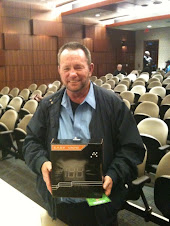
DIGITAL VAPORIZER RAFFLE!!!!!!!

Network with Attorneys, Grow Specialists, Patients and Caregivers.

Monday, August 30, 2010

Sheriff Explains Action Against Medical Marijuana Sellers, Growers

One day after an investigation that resulted in 15 arrests, the closure of two medical marijuana dispensaries and the seizure of approximately $750,000 worth of marijuana products, Oakland County Sheriff Michael Bouchard spoke about what he sees as a growing problem.
“This is Michigan. This is not a Cheech and Chong movie,” Bouchard said during a Thursday afternoon press conference.
Ferndale’s Clinical Relief medical marijuana dispensary, 362 Hilton, was among the establishments that were raided Wednesday by undercover officers with Oakland County’s Narcotics Enforcement Team.
Police action may not have come as a surprise to employees there. Bouchard said the Sheriff’s Office recently warned those at the facility that police believed they were participating in illegal activity.
Undercover officers allegedly bought marijuana at the facility without a medical marijuana card, which is required for a legal purchase of the drug. Marijuana also was being sold in the parking lot, and undercover officers witnessed hand-to-hand drug deals, Bouchard said.
Other drugs were also confiscated, and the owner had solicited others to buy high-end marijuana to sell in the establishment, he said.
“There were many commonalties with what we regularly see in drug houses,” Bouchard said. “One place had live alligators walking around protecting the product.”
The evidence was on display for the media, ranging from jars of a wide variety of marijuana strains and marijuana plants to candy, cookies, sugar and lollipops, along with several guns.
Everybody’s Cafe, in Waterford Township, was raided under similar circumstances Wednesday, after officers said they purchased marijuana without proper credentials there. Police also raided multiple residences, though the locations of those homes were not released.
Many arrest details are not yet available because no suspects have been arraigned. Arraignment could be as soon as today, Bouchard said.
“( Marijuana is ) illegal to use except in certain, limited circumstances,” Oakland County Prosecutor Jessica Cooper said during the press conference. “In Michigan, it is very limited.”
Limits include a cap on plants per patient ( 12 ) and patients per caregiver ( five ). Patients are not able to purchase the drug legally from anyone other than their designated caregiver, and marijuana plants must be maintained in an enclosed, locked facility.
“No dispensaries are authorized,” Cooper said. “No co-ops are authorized.”
She said the state’s medical marijuana act is quite different from that of other states, like California.
“Most of the population does not understand that,” Cooper said. “Medical marijuana is an exception ( that has been ) carved out for people who have a debilitating disease.”
Both Bouchard and Cooper agreed that the statute needs clarification. They suggested changes that might make the law clearer.
“New Jersey has one state-run dispensary,” Cooper said. “That would eliminate the need for caregivers and eliminate the need for growers.”
Bouchard said a tamper-proof medical marijuana card with a photo ID should be required. A photo is not required on the current cards.
“There’s no way an officer or a deputy can verify that it’s a valid card,” Bouchard said.
Law enforcement officials don’t want to deal with the issue, Bouchard said, noting that enforcement can be costly and require many resources.
“We don’t want to deal with this at all if it’s within the scope of the law,” Bouchard said. “It’s going to divert a lot of precious resources from things we could and should be doing. This is not something we should be spending a lot of time and money on.”
Bouchard said in his opinion, voters decided that people who were suffering deserved to have their pain lessened when the measure passed in November 2008.
“This has gone far ( away ) from that,” he said. Patients have received medical marijuana cards for things such as stomachaches and shoulder pain, Bouchard said, while others have taken the opportunity to “take an illegal operation and give it the air of legality.”
An investigation is ongoing and more arrests could be made. Suspects could face charges such as possession of marijuana with intent to deliver and manufacturing marijuana, with penalties ranging from 90 days to 15 years imprisonment.
“This is a clear abuse of Michigan’s medical marijuana exemption,” Bouchard said. “It will get nothing but worse. There will be more problems unless the Legislature does its job.”

Source: Daily Tribune, The (Royal Oak, MI)
Copyright: 2010 The Daily Tribune
Contact: editor@dailytribune.com
Website: http://www.dailytribune.com/
Author: Dave Phillips, For the Daily Tribune

Traverse City Approves Marijuana Regulations

Traverse City, MI — New regulations that dictate when and where city residents can grow and distribute medical marijuana could be changed if problems arise.
City commissioners on Monday gave final approval to a new ordinance that regulates land-use issues tied to the Michigan Medical Marijuana Act. It takes effect Aug. 26.
The ordinance allows for cultivation of up to 72 marijuana plants in single-family homes, and that concerns those who believe such activity could degrade the city’s residential neighborhoods. But commissioners weren’t ready to rule out residential growth.
“This law is not set in concrete,” Mayor Pro-Tem Ralph Soffredine said. “We can bring it back to the table, and we can tweak it and do what we want to do with it. But we need to give it a chance.”
The Michigan Medical Marijuana act, approved in 2008, allows patients to possess up to 2.5 ounces of marijuana and 12 plants. It also allows designated caregivers to grow and distribute plants to up to five patients.
But the act doesn’t specify where or when patients and caregivers can grow or exchange marijuana, so municipalities across the state were left to decide for themselves.
The new ordinance doesn’t affect the amount of plants a patient can have under state law, or the number of plants a caregiver can grow or distribute.
It instead specifies where legal marijuana-related activity can occur within city limits.
City resident Julia Wagner told commissioners she’s uncomfortable with marijuana growth in residential districts.
She voted in favor of medical marijuana, but assumed it would be closely regulated and available only at pharmacies.
“I had no idea that this could invade my neighborhood,” she said.
Her view was shared by Adrienne Rossi, a Central Neighborhood resident who called marijuana growth “extremely unhealthy for our residential neighborhoods.”
Pro-medical marijuana activists countered that residential growth allows patients easier and safer access to the drug.
Current residential growth hasn’t led to significant problems, they said, and the city could expose itself to potential litigation if it tries to prevent residents from exercising a right afforded under state law.
The ordinance allows for cultivation in excess of 72 plants in industrial districts, provided the cultivation facility owner obtains a license from the city.
It also allows for medical marijuana “collectives” in most commercial districts of the city.
Any medical marijuana that fits within the confines of the Medical Marijuana Act can change hands in such collectives, but growing isn’t allowed there.

Source: Traverse City Record-Eagle (MI)
Author: Art Bukowski
Published: August 17, 2010
Copyright: 2010 The Traverse City Record-Eagle
Contact: letters@record-eagle.com
Website: http://www.record-eagle.com/